You got asked to help “just this once”
The message lands midweek, right when the calendar finally looks manageable: “Could you jump in—just this once? It’s quick, and we’re in a bind.” The ask is framed like a favor, not a project. That’s what makes it slippery. Saying yes feels generous; saying no feels oddly risky, like you’re closing a door you haven’t even seen yet. But the clock doesn’t care about tone. An unpaid “small” task still competes with billable hours, job searching, family time, or recovery—things that don’t reschedule neatly.
Before the details blur into goodwill, it helps to treat the request like a real commitment with a real cost. The next move isn’t deciding on principle; it’s figuring out whether you can afford the time hit without creating a quiet cash-flow problem.
Check your runway before you say yes
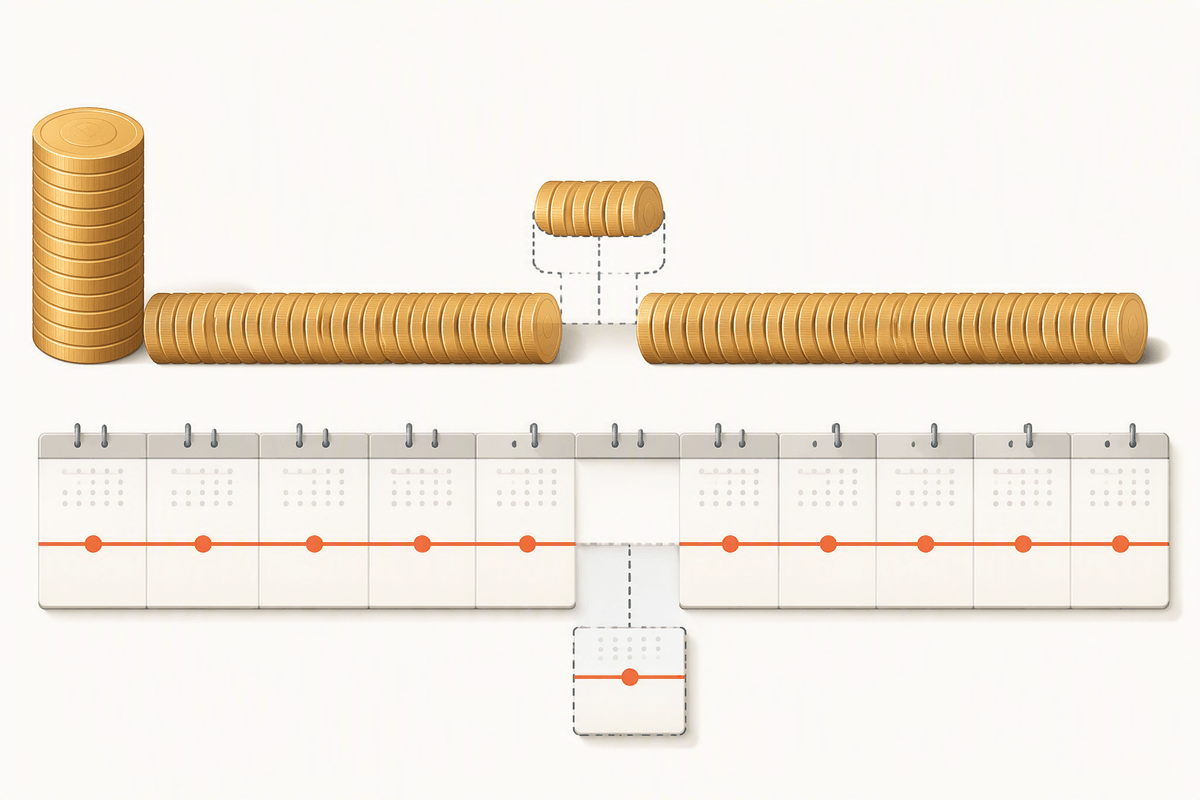
Pull up the unglamorous numbers before the optimistic story takes over. If the next two weeks are already packed, the real cost isn’t the task—it’s what gets squeezed: a paid shift you can’t take, invoices you won’t send, applications you won’t finish. A simple runway check keeps it concrete: how many weeks of expenses are covered by cash you can actually access, and how much of that cushion disappears if you give away 5–10 hours.
If the margin is thin, the “quick favor” can quietly force expensive moves later—credit card float, a rushed client discount, a late fee, a stressful scramble for work. The more variable your income is, the stricter this filter needs to be. When the math says you’re tight, the right answer might still be “yes,” but only with a smaller scope, a hard stop date, or a trade that protects your cash flow.
When free work buys a real portfolio asset
The numbers might say you can take the hit, but that still leaves the harder question: what are you actually getting back? “Exposure” doesn’t pay rent, and “gratitude” isn’t something you can show a future client. The only version of unpaid work that ages well is the kind that turns into a portfolio asset you can reuse—something specific enough to point to, and clean enough to share without asking permission every time. Without that, the trade is mostly time for hope, and hope is volatile.
Look for deliverables that survive the moment: a before/after teardown, a published case study, a shipped feature with your name attached, a talk deck, a measurable result you can cite. Put it in writing up front—what will exist at the end, where it will live, and whether you can reference it publicly. If they can’t agree to that basic clarity, the “favor” isn’t building equity; it’s just disappearing into their backlog.
Access to people you couldn’t meet otherwise
Sometimes the portfolio piece is fine, but the real upside is the room you get into while building it. A founder call you’d never be booked for, a Slack with senior operators, a review thread where hiring managers actually weigh in—those are access points that don’t show up on a résumé but change the next three months of outreach. The constraint is timing: those conversations happen during business hours, and “just sit in” still costs a billable block or a recovery night.
It only counts as access if it’s structured. Before saying yes, ask who you’ll be working with directly, whether you’ll be introduced as the lead on a deliverable, and what meetings you’re expected to attend. If they can’t name the people, can’t put you on the calendar, or keep you behind the curtain, the network upside is mostly imaginary—and you’re back to donating labor without a pathway forward.
A low-stakes lab for new specialties
Once the access is real, the next question is what you’re allowed to practice while you’re in the room. The best “free” roles aren’t broad and vague; they’re narrow enough that a mistake won’t crater a client relationship, but meaningful enough that you touch a new specialty end-to-end. That usually means a contained slice: one onboarding flow, one set of analytics events, one email sequence, one pricing page experiment. The constraint is supervision—if there’s no owner reviewing your work, “low-stakes” turns into “high-risk, unpaid.”
It helps to treat the assignment like a short pilot with a skill goal, not a general favor. Pick one capability you want to test (sales enablement, user research, paid ads, ops automation) and define a deliverable that can be checked in a week. If the scope balloons or the feedback loop disappears, you learn something too: the role isn’t a lab, it’s a dumping ground—and that’s when the specialization experiment stops being rational.
Borrowed credibility from trusted organizations
Even when the specialty experiment is contained, there’s still the question of how it reads to someone who might pay you later. A recognizable nonprofit, university lab, accelerator, or industry association can function like a credibility bridge: not because the work is better, but because the name reduces perceived risk. The constraint is verification friction. If the organization won’t list you on a page, let you cite the project, or provide a short reference email, the “brand halo” stays private—and private credibility doesn’t convert.
Before committing hours, map the borrowed credibility to a concrete asset: a public byline, a speaker slot, a formal volunteer role, or a letter with dates and scope. If they can’t offer any of that, treat the work as pure practice and price it accordingly.
Signals you’re being used, not developed
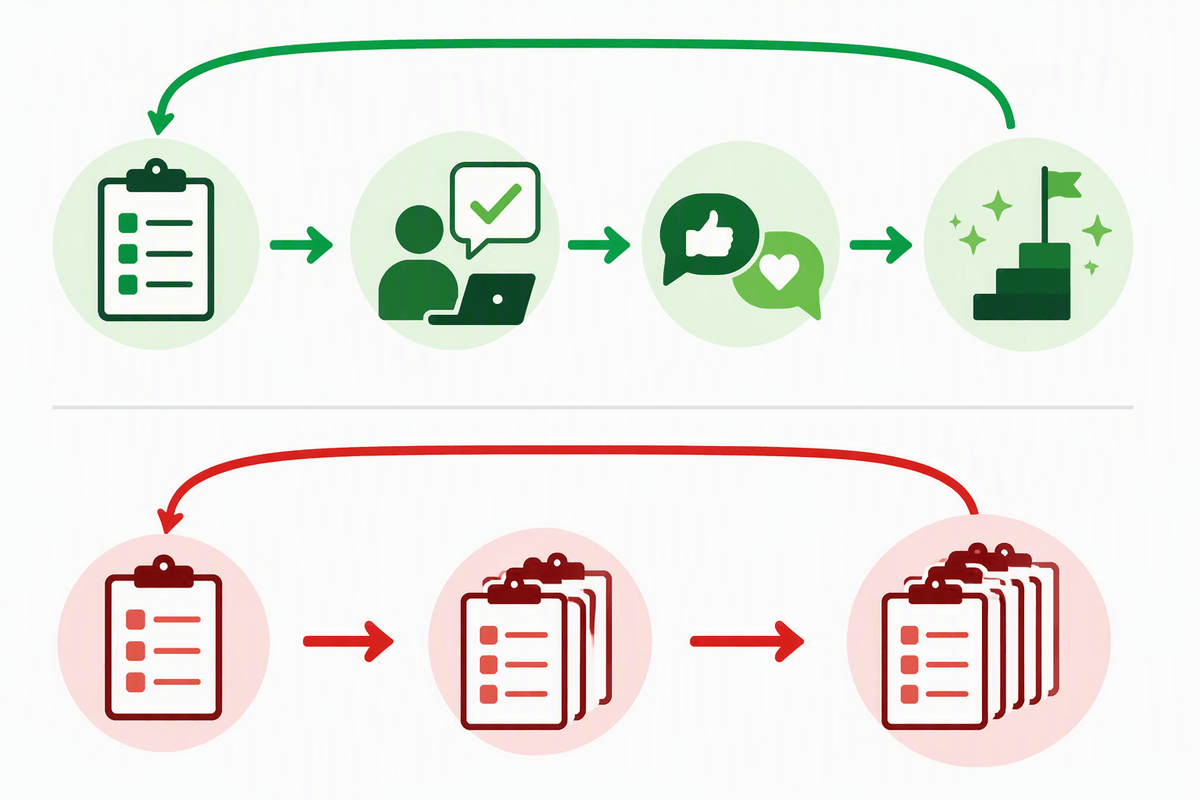
At this point, the trade can still be rational—until the pattern shifts from “pilot” to “patch.” The first signal is how the work enters your week: last-minute pings, vague urgency, and no one owning decisions. If every request is framed as a crisis, you’re not being trained; you’re being used as overflow capacity. A second signal is deliverable drift. The agreed “one flow” becomes “while you’re in there, can you also…” until the hours are uncountable, and the only deadline that matters is theirs.
Watch what happens when you ask for basics that protect your upside: a clear scope, a named reviewer, permission to cite the result, a fixed meeting cadence. If those asks are treated as inconvenient, that’s information. So is silence on next steps—no introductions, no feedback, no defined end date. Development has a loop; extraction just has more tasks.
Decide in writing, then review after two weeks
Once you’ve seen the extraction signals, the cleanest move is to turn the “favor” into a short written agreement that matches the reality of your schedule. A simple email is enough: the exact deliverable, the hours you’re willing to spend, the single decision-maker who reviews it, and what you’re allowed to show or cite afterward. Include a stop date on the calendar, not “when things calm down.” The constraint is enforcement—if it isn’t written, it will expand to fill whatever time you leave unguarded.
Two weeks is long enough for the pattern to show itself. Put a 15-minute review on your calendar and score it like a trade: actual hours vs. promised, speed of feedback, whether the portfolio or access materialized, and whether new asks stayed inside scope. If two weeks produced more urgency than progress, you don’t need a dramatic exit—just a polite closeout and a move back to paid work.