Cartagena beyond the postcards: what’s worth your time
The first time Cartagena tried to “sell” itself to me was before I’d even found my hotel: the sun was already heavy, the sidewalks were tight, and every few steps someone offered a tour, a bracelet, or a “best price.” It’s not dangerous in a constant way, but it can be mentally tiring—especially if you arrive midday—so the smartest move is to treat your first few hours like an acclimation period, not a checklist sprint.
What’s genuinely worth your limited 3–5 days is surprisingly simple: give the Walled City your early mornings for architecture and museums (before the heat and cruise crowds), and save Getsemaní for late afternoon into night when it turns social instead of sweaty. Beaches and islands can be great, but they’re the easiest place to overpay and lose a whole day to logistics; if you only do one water day, pick it intentionally and protect the rest of your time for food, drinks, and wandering on foot.
Two things that consistently “work” here: planning around temperature (siesta isn’t a cliché) and accepting that convenience costs money (taxis, reservations, rooftop drinks). If you try to beat both—cheap and spontaneous, all day long—you’ll spend the trip negotiating instead of enjoying it.
Choose your base: Walled City, Getsemaní, or Bocagrande
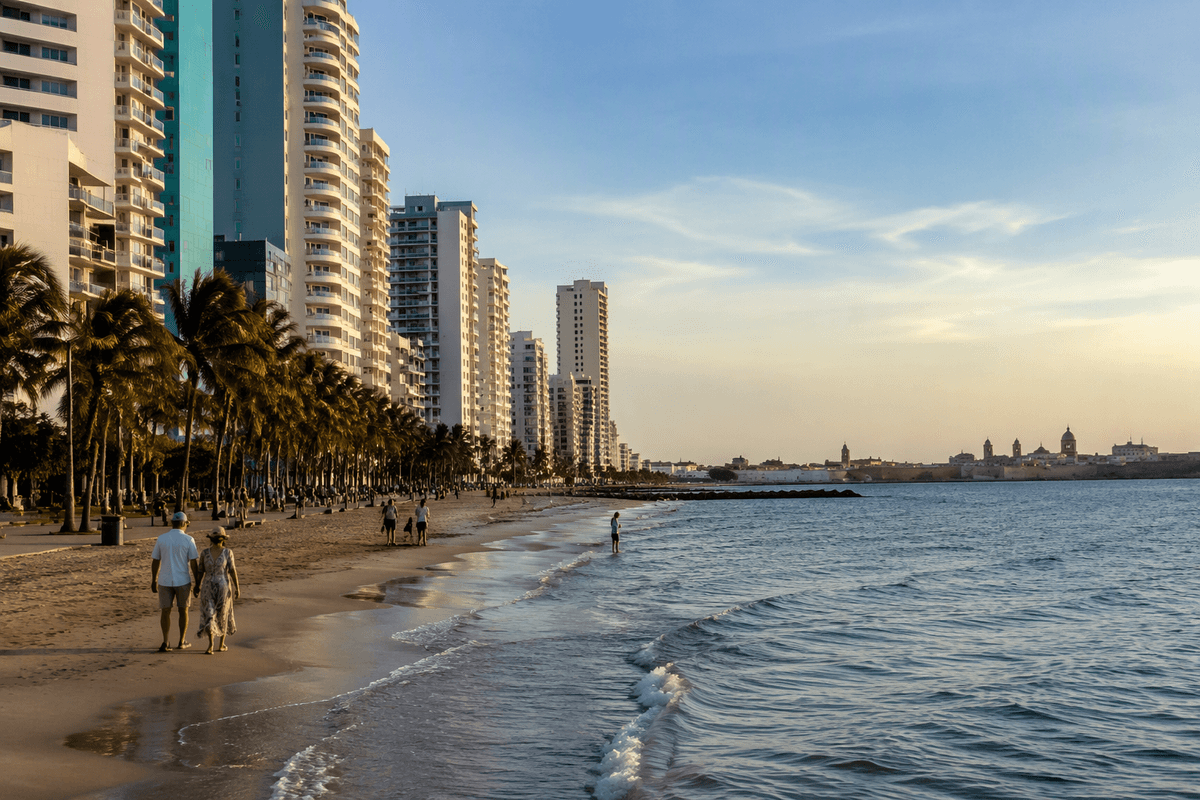
I hesitated over a hotel map that made everything look walkable, then remembered what midday Cartagena feels like: not “a pleasant 20-minute stroll,” but a slow simmer that turns every extra block into a decision. Where you sleep matters less for distance than for how often you’ll bail on plans because you’re hot, hungry, or tired of dodging sales pitches.
If you can afford it, the Walled City is the easiest base for a first timer: you’ll actually use your mornings well because you can step out early, do museums and plazas, and duck back for a shower or a nap without negotiating transport. The friction is price and noise—beautiful boutique streets can also mean late-night music and higher restaurant markups within a few blocks of your door.
Getsemaní tends to be the better “value” choice for mid-range budgets, especially if you want food and bars that feel less polished and more local-social. It works best if you’re okay with a little grit and you’re realistic about late nights: some streets are lively (great), some are just loud (less great), and the experience changes drastically depending on which block you pick.
Bocagrande is the comfort play—high-rises, malls, breezier beachfront—but it’s a commute to the parts of Cartagena you’ll likely prioritize. It’s worth it if you want quiet sleep and beach access; it’s not worth it if you’ll resent paying for taxis twice a day just to get back to “real” atmosphere.
What to eat: coastal classics, street bites, splurges
The first real food decision hits fast: do you eat the first “menu del día” you see because you’re starving, or do you hold out for something you’ll remember? In the Walled City, the pretty-looking restaurants can be reliably good and reliably priced for tourists, which is fine once—but if you do every meal there, your budget quietly disappears. I found it worked better to treat Old Town as my “breakfast and one nice dinner” zone, then let Getsemaní carry the casual lunches when the heat makes you want something quick and cold.
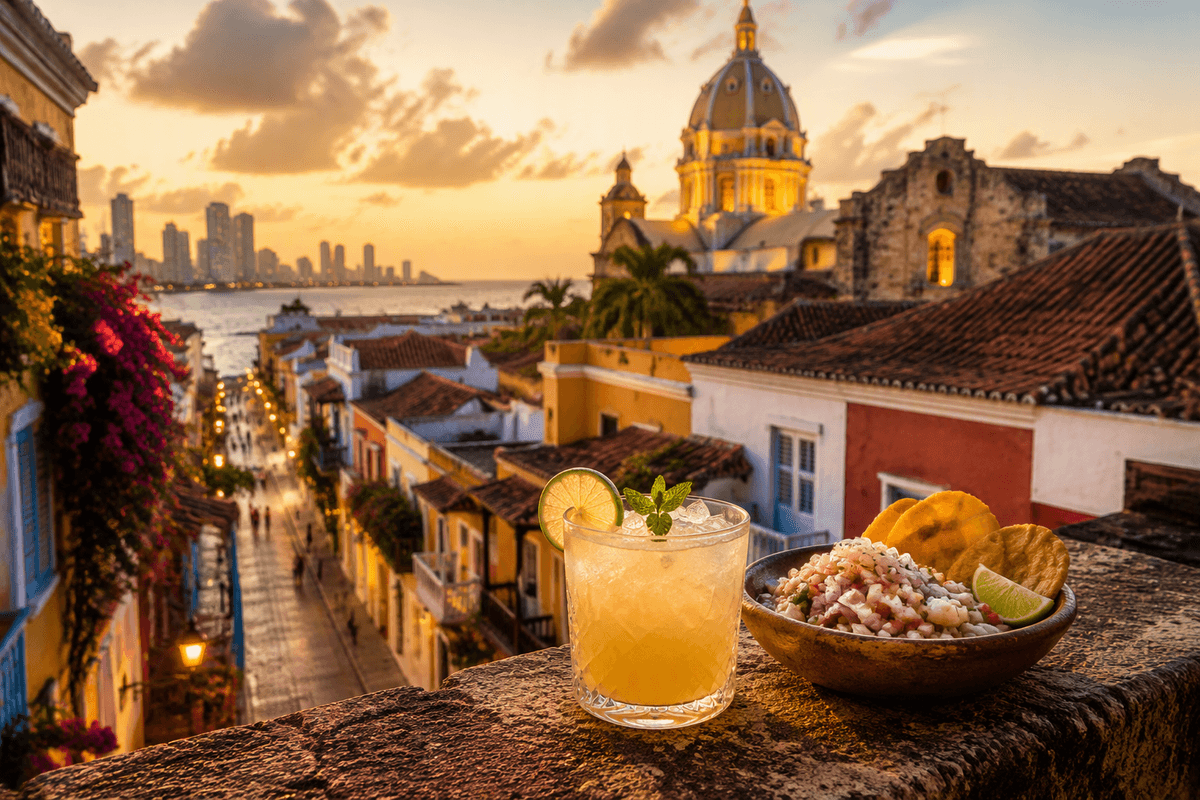
For coastal classics, you’re basically choosing between comfort and freshness. Coconut rice with fish (often fried), patacones, and a simple salad is Cartagena’s default plate, and it’s satisfying when the kitchen is turning it over quickly. When it doesn’t work is mid-afternoon lull: food sits, service slows, and you pay the same for something less crisp. If you want ceviche, aim for a place that feels busy and refrigerates properly; it’s not a dish I’d gamble on from an empty counter just because it’s “authentic.”
Street bites are where the city feels generous—arepas de huevo, empanadas, fruit cups—but the trade is predictability. Go early evening when things are freshly fried and you’re not sun-drunk. For splurges, I’d spend on a reservation-worthy seafood or tasting-leaning dinner (when you actually want to sit for two hours), not on a random lunchtime “seafood platter” near the most photographed plaza.
What to drink: rum, cocktails, coffee, and cold beer

At about 5:30 p.m., I found myself doing the Cartagena math: rooftop cocktails sound perfect, but am I paying for the view or the drink? In the Walled City, many rooftops are genuinely fun—breeze, golden light, a little people-watching—but the bill can jump fast once you add service and a second round. I’d pick one “view” stop on purpose (sunset), then move to Getsemaní where the same budget buys a longer, looser night and you’re not stuck performing vacation in a dress code.
Rum is everywhere, but not every rum pour is worth the markup. If you actually like rum, ask for a simple tasting flight or a straight pour before you commit to sugary cocktails; a lot of menus lean sweet to cover mediocre spirits. Cocktails, on the other hand, can be excellent when the bar is set up for volume—busy nights tend to mean better balance and colder ice, while slow afternoons can taste like melted ambition.
Coffee works best as a tactical break, not a pilgrimage: a good iced coffee or cold brew buys you another hour of walking, but chasing “the best” across town at noon is how you lose energy. And when the heat wins, a cold Aguila or Club Colombia is the low-effort choice that rarely disappoints—just check the bottle is actually cold, because lukewarm beer in the tropics feels personal.
What to explore: history, beaches, day trips
I learned fast that “history” in Cartagena is a timing problem more than a ticket problem. The Walled City is at its best before 10 a.m., when you can actually read plaques, duck into a museum, and walk the ramparts without feeling like you’re melting alongside the tour groups. Castillo San Felipe is the big, obvious fort for a reason—it’s impressive and legible even if you’re not a history nerd—but it’s also exposed, so showing up late morning turns it into a sun test. If you’re choosing, I’d prioritize the castle over squeezing in every small museum, then use the shaded streets back inside the walls as your recovery loop.
Beaches are where first-timers lose the most time. Bocagrande is convenient but not charming; it works if you want a quick salt-water break without logistics, not if you’re imagining postcard swimming. For the “nice water” day, the Rosario Islands can be genuinely beautiful, but you’re paying in both cash and structure: early departure, set schedules, and the risk of being funneled into an average lunch at a “partner” spot. If you’d rather keep flexibility, a shorter trip to Barú/Playa Blanca can work—just expect aggressive upselling once you arrive and pick a place that’s clear about what a chair, shade, and food actually cost.
Putting it together: your Cartagena pace, without FOMO
One afternoon my plan collapsed somewhere between “quick museum” and “just one more block”—the heat spiked, my phone dimmed, and suddenly the only sensible choice was a long, air-conditioned lunch. That’s basically the Cartagena skill: build a day that can bend without feeling like you’re failing at vacation.
If you have 3 days, give mornings to the Walled City (castle or one museum, then slow wandering), protect 1–4 p.m. for shade/siesta, and let Getsemaní carry your evenings. With 4–5 days, add one intentional water day (islands or a simpler beach), but keep the next morning light—boats plus sun tends to steal your energy twice. Spend your splurge on one reservation dinner and one sunset rooftop; the rest works better as flexible street food and casual bars, because you’ll change your mind based on crowds and how safe a block feels at night.