Nausea that shows up after “healthy” vitamins
It usually starts as a small wobble in the stomach while you’re already mid-morning—keys in hand, coffee nearby, and that “good for me” multivitamin swallowed on autopilot. Ten or twenty minutes later, the queasiness arrives like a wave: not exactly heartburn, not quite hunger, just a faint warning that makes you regret the timing. Some days it doesn’t happen at all, which is what makes it confusing. You may even assume it must be the coffee, stress, or a random bug, because a vitamin doesn’t feel like something that should cause nausea.
But multivitamins aren’t gentle by default. They can pack minerals (often iron or zinc) and acidic ingredients into a single large pill, and on a relatively empty stomach that concentration can feel “sharp.” If you’re someone whose mornings already run dry—little breakfast, quick caffeine, maybe mild reflux—the same routine can make nausea more likely, while a later dose with food may feel completely different. The pattern can be inconsistent, but it’s rarely meaningless.
Stomach lining irritation from concentrated minerals
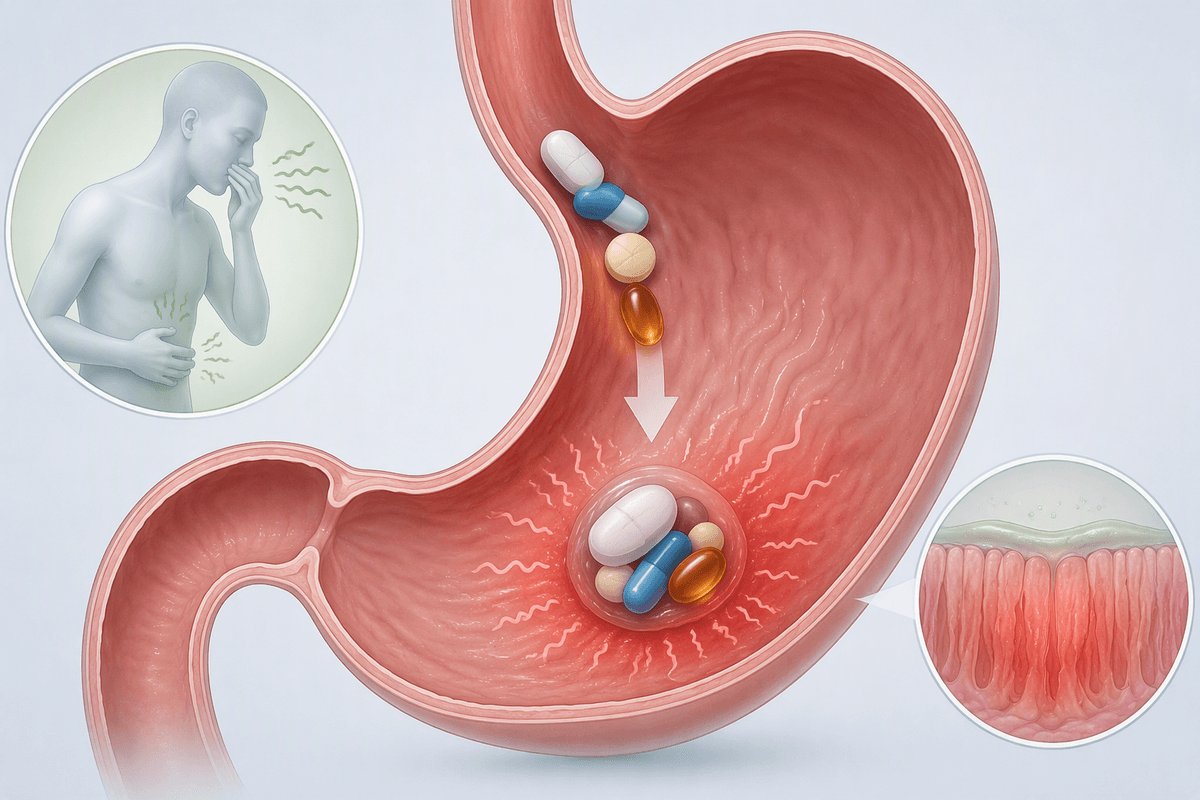
You may notice it first as a slightly “hot” feeling right behind the breastbone, or a sour edge that shows up even before you’ve taken more than a few sips of coffee. Then, instead of settling, your stomach feels oddly tense—like it’s bracing. This is where concentrated minerals can matter. Iron and zinc, in particular, can feel harsh when they hit stomach fluid without much else around them, and some formulas also include acidic vitamins that add to that sharpness. It’s not that the vitamin is “bad”; it’s that the dose is compact and fast.
A little food from yesterday still in your stomach, a slightly later breakfast, or a morning with less reflux can change the whole reaction. On other days, the same pill can land on a drier, more sensitive lining and trigger queasiness, burping, or a heavy, unsettled feeling that lingers longer than you expect.
Empty stomach dosing: reasonable habit, surprising backlash
It can feel sensible to take a multivitamin “properly” on an empty stomach—get it done early, before breakfast gets rushed or forgotten. But the empty-stomach version of that habit is often the one that backfires. Without food to dilute and slow things down, the tablet dissolves into a small pool of fluid and becomes a concentrated burst of minerals and acids. Instead of a steady absorption, you get a sudden, local hit that can feel like nausea, a hollow churn, or a wave of salivation that mimics hunger.
“Empty” isn’t a fixed state: a few bites grabbed while standing, leftover acidity from overnight reflux, or even a big gulp of water can change how the pill lands. Some mornings, your stomach handles the same dose fine; other mornings, it reacts as if the lining is already irritated—especially when coffee follows right after.
Form, coating, and release speed change the experience

Sometimes the difference shows up before you even feel nauseated: the tablet sits in your throat for a second, or you taste something metallic as it goes down. That’s often a clue that the “same” multivitamin isn’t behaving the same way in your stomach. Hard, compressed tablets can break apart quickly and dump their contents in one spot, while softgels tend to slide through faster and may feel smoother simply because they don’t linger as long. Chewables and gummies can be gentler for some people, but they also deliver acids and sweeteners up front, which can still feel sharp if your stomach is already touchy.
Coatings and “time-release” labels add another layer of unpredictability. A coating may delay the initial irritation—or it may dissolve unevenly and create a delayed wave of queasiness that hits after you’ve already started driving or drinking coffee. If the pill releases iron or zinc faster than your stomach can buffer it, the sensation can feel sudden and out of proportion, even when nothing else about your morning changed.
Interactions with coffee, meds, and sensitive digestion
It’s often the second sip of coffee that makes the timing click. The vitamin went down fine, and then the warmth and acidity of caffeine seems to “wake up” everything—sourness rises, your stomach feels splashy, and the queasiness suddenly has somewhere to go. In some routines, coffee can speed stomach emptying for one person and slow it for another, but either way it changes the environment the tablet is dissolving into. If you already run a little reflux-prone in the morning, that combination can make a mineral-heavy pill feel sharper than it did on a weekend breakfast.
Medications can add their own friction, which is easy to miss when everything happens in a tight morning stack. Common pain relievers, certain antibiotics, thyroid medication, and even occasional antacids can shift how your stomach feels or how minerals move through you. The “sensitive digestion” isn’t constant—sleep, stress, and an empty stretch between dinner and morning can leave your stomach less buffered, so the same coffee-plus-vitamin routine only sometimes turns into nausea.
Dose stacking and “more is better” confusion
It often happens on the mornings you’re trying to be “extra good”: the multivitamin, then an added vitamin D, maybe a zinc lozenge because you felt a scratchy throat, and a magnesium tablet left on the counter from last night. None of those choices feels dramatic on its own. But swallowed close together, they can behave like one bigger, more concentrated dose—especially if they’re all mineral-heavy and your stomach is already running on coffee and air.
The nausea can feel like a sign your body is “rejecting” a specific product, when it may be the stack and the timing doing most of the work. Labels reinforce the idea that more nutrients automatically means more benefit, so people double up without noticing how quickly amounts add together across products. If the queasiness shows up mainly on high-effort mornings, that pattern can be a clue—not a verdict that something is wrong.
What people change when nausea keeps recurring
After the third or fourth queasy morning, the routine starts to get negotiated. Some people begin by skipping days, then notice the nausea “mysteriously” disappears—until the next attempt resets the pattern. Others switch brands and feel briefly better, not because the new vitamin is magic, but because the pill is smaller, the iron or zinc is lower, or the coating dissolves differently. A common misunderstanding is blaming one ingredient when the real change was accidentally taking it with a more solid breakfast.
What tends to stick are small timing edits: moving the vitamin to the first real meal instead of coffee-only mornings, separating it from other supplements, or choosing a formula without iron unless it was specifically needed. Even then, the feedback can be inconsistent—travel, stress, and refluxy nights can bring the sensation back. The useful shift is noticing the “conditions” your stomach seems to require, rather than treating nausea as a personal failure or a sign something is suddenly wrong.