Why hostels feel intimidating—and why they’re worth it
The first time I hovered over “Book now” on a hostel page, it wasn’t the price that stopped me—it was the mental image of a fluorescent-lit dorm, someone’s alarm going off at 6:00 a.m., and my stuff floating around in a room full of strangers. That intimidation is normal because hostels compress all your travel anxieties—sleep, safety, and social awkwardness—into one booking decision. And if you’re solo, it can feel like you’re choosing between saving money and feeling in control.
What makes hostels worth it is that they can buy you flexibility: a central location you couldn’t afford otherwise, a kitchen that quietly cuts your daily spend, and staff who can solve small problems fast (late buses, weird check-in rules, last-minute tours). The catch is that you’re trading privacy for optional connection—optional if you choose well, exhausting if you don’t.
The reframe that helped me: don’t ask “Are hostels good or bad?” Ask “Which discomfort can I tolerate for 7–14 days?” If light sleep is your weak point, you can pay a little more for smaller dorms. If loneliness is the bigger risk, a social hostel can be cheaper than “saving” money in a private room and spending it trying to distract yourself.
Choosing the right hostel: vibe, location, and reviews
I learned the hard way that “best value” can mean “best value for someone who sleeps like a rock.” The first filter I use now is vibe, because it predicts your nights more than the photos do. If the hostel advertises bar crawls, drinking games, or has a bar onsite, assume late noise and early-morning door slams. That can be perfect if you’re worried about feeling awkward and want built-in social scaffolding; it can be miserable if you’re on a tight itinerary and need real sleep. When I’m unsure, I’ll pick “social but not party”: events like walking tours or family dinners, but no bar as the main feature.
Location is the second lever, and it’s a time-versus-money equation. “Central” is usually worth paying a bit more for on a 7–14 day trip because it reduces daily transit decisions (and the fatigue tax that comes with them). But watch for central-but-loud: nightlife streets, plazas, and train lines can turn a quiet hostel into a nighttime drumbeat. I’ll trade one extra metro stop for a calmer block if I know I’m a light sleeper.
Reviews are where you confirm reality. Sort by newest and search for the same three words: noise, clean, lockers. One-off complaints happen; patterns are predictive. Pay special attention to mentions of bathroom ratios, Wi‑Fi stability (especially if you’ll book onward travel), and whether lockers require your own padlock—small logistics that either keep your day smooth or quietly annoy you for a week.
Room types and booking basics: dorms vs privates
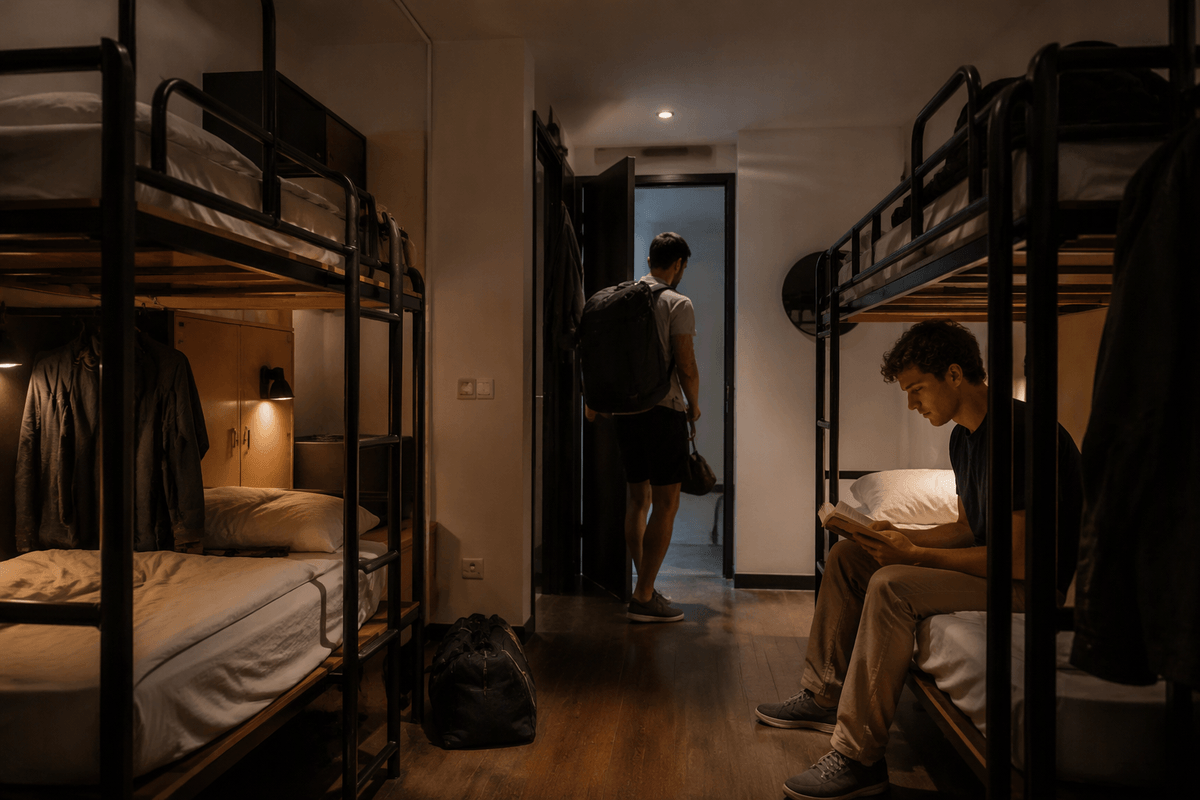
I usually hesitate right at the room-type dropdown: 4-bed dorm, 10-bed dorm, or “private” that costs almost as much as a budget hotel. For a 7–14 day trip, the decision is less about being “brave” and more about protecting the part of travel you’re worst at—sleep, focus, or social energy. If you’re a light sleeper, a 4–6 bed dorm is often the best compromise: you still get hostel pricing, but you cut down the roulette of late arrivals and people repacking their lives at 2:00 a.m. Bigger dorms can be dramatically cheaper, but the churn (different schedules, more doors, more alarms) compounds over a week.
Privates aren’t automatically the “safe” choice, either. Some privates still share bathrooms, some are right above common rooms, and some have thin walls—so you’re paying for a door, not silence. The setup I like when I’m trying to balance cost and sanity: start with a dorm for the first 2–3 nights (when you actually want the social ease), then switch to a private or smaller dorm mid-trip if you feel sleep debt building.
Booking-wise, I prioritize flexible cancellation unless the price difference is meaningful, because hostel quality is hard to verify until you’re inside it. Confirm check-in hours (late arrivals can get messy), whether linens are included, and whether you need your own padlock—tiny details that become annoying at midnight.
Safety, valuables, and comfort: practical essentials
The first time I walked into a dorm and realized the lockers were “bring your own padlock,” I had that sinking feeling of either leaving my laptop loose or sprinting back out to find a shop before everything closed. That’s the kind of safety issue that actually shows up in hostels: not movie-level danger, but small frictions that make you feel exposed when you’re tired and unfamiliar with the neighborhood.
My baseline system is simple and a little boring: passport, cards, and backup cash stay on my body (money belt or a zipped inner pocket), and everything else is “annoying but replaceable.” If the hostel has a real locker, I’ll use it—but I assume it’s only as good as the lock and the habit. A soft bag that collapses into the locker is easier than a hard-shell suitcase that won’t fit, and it reduces the temptation to leave things on the bed. If you’re choosing between two similarly priced places, I’ll take the one with larger lockers and individual bed lights/curtains over the one with prettier common spaces, because comfort is what keeps you from making sloppy decisions.
For sleep and hygiene, you’re managing variables, not chasing perfection. Earplugs fix 80% of noise problems; an eye mask fixes most of the rest. Flip-flops for the shower are non-negotiable, but the trade is you’ll carry extra stuff—worth it if you’re in shared bathrooms for a week. And if you can pick your bed, aim away from the door and near a wall outlet; it sounds minor until you’re charging your phone from the floor while people shuffle past at 1:00 a.m.
Hostel etiquette and socializing without burnout
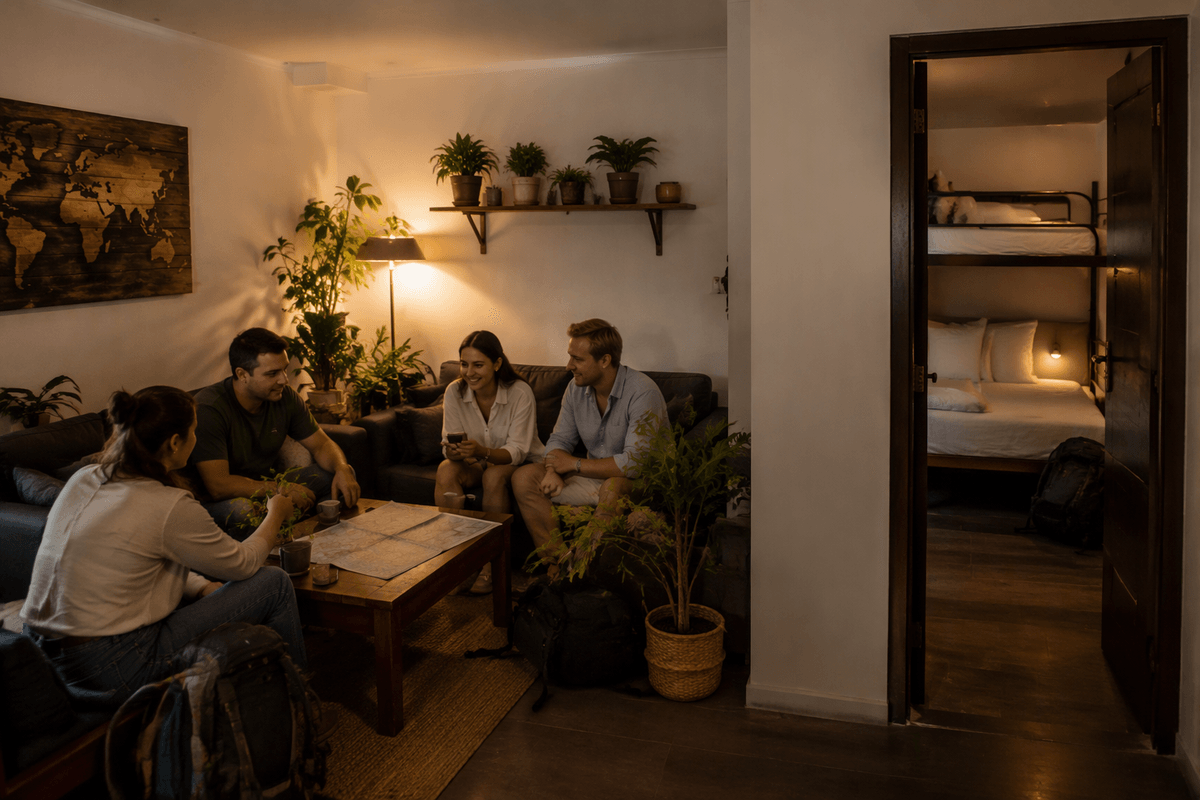
The first night I actually wanted to meet people, I also wanted to protect my sleep—so I stopped trying to be the “easygoing dorm mate” and started treating etiquette like friction control. Pack and repack outside the room when you can (bathroom or hallway), because the loudest part of a hostel isn’t conversation, it’s plastic bags at midnight. If you know you’ll be up early, set one alarm (not three), lay out clothes before bed, and use your phone flashlight instead of the overhead light. None of this makes you fun at parties, but it makes you tolerable at 7:00 a.m., which matters more over a week.
Socially, the move that prevents burnout is choosing a “low-commitment on-ramp.” Kitchens and free walking tours work better than bar crawls if you’re new, because you can dip in for ten minutes without it being weird. I’ll open with something specific (“Have you done the day trip to X—worth it?”) and then give myself permission to exit: refill water, take a call, go shower. If you wait until you’re lonely to socialize, you tend to overdo it and lose the next day.
Making hostels work for you on any trip
On my third hostel stay, I realized the real win wasn’t “finding the perfect place”—it was building a routine that made an imperfect place livable. If you’re doing 7–14 days, think in blocks: 2–4 nights in one hostel, then reassess. The friction you can shrug off for a weekend (one clogged shower, one loud night) gets heavier when it repeats, so I’d rather move once than spend a full week negotiating the same annoyances.
What’s worked best for me is picking one priority and paying for it: if sleep is the make-or-break, spend on a smaller dorm or a private for part of the trip; if budget is tight, stay in a bigger dorm but “buy back” comfort with consistency (same bedtime, earplugs, laundry day mid-trip). Kitchens save real money, but they also cost time—when I’m running a packed itinerary, I’ll do breakfast and snacks in-house and stop trying to cook full dinners every night.
The decision cue I’d use: after night two, ask, “Am I recovering here?” If the answer is no, switch hostels before you’re tired enough to start losing days.