Why genetic counseling rarely gives a simple yes-or-no
The first thing many people notice isn’t a genetic term—it’s how the same question keeps getting answered three different ways. Your oncologist says “it could be hereditary,” a relative insists “it runs in the family,” and an intake form turns your life into checkboxes. In that moment, it’s easy to expect genetic counseling to deliver a clean verdict: yes or no, inherited or not.
But the work is usually closer to weighing evidence than issuing a stamp. Family history can be incomplete, diagnoses get misremembered, and older pathology details may be missing or vague. Even when testing is done, results don’t always land as “positive” or “negative” in the way people imagine. A negative result may only rule out what was tested, not every inherited risk. A positive result may explain risk without predicting timing. And an uncertain finding can feel like being handed a new label without clear instructions—especially when treatment decisions are already moving fast.
Family stories, tumor clues, and personal history patterns
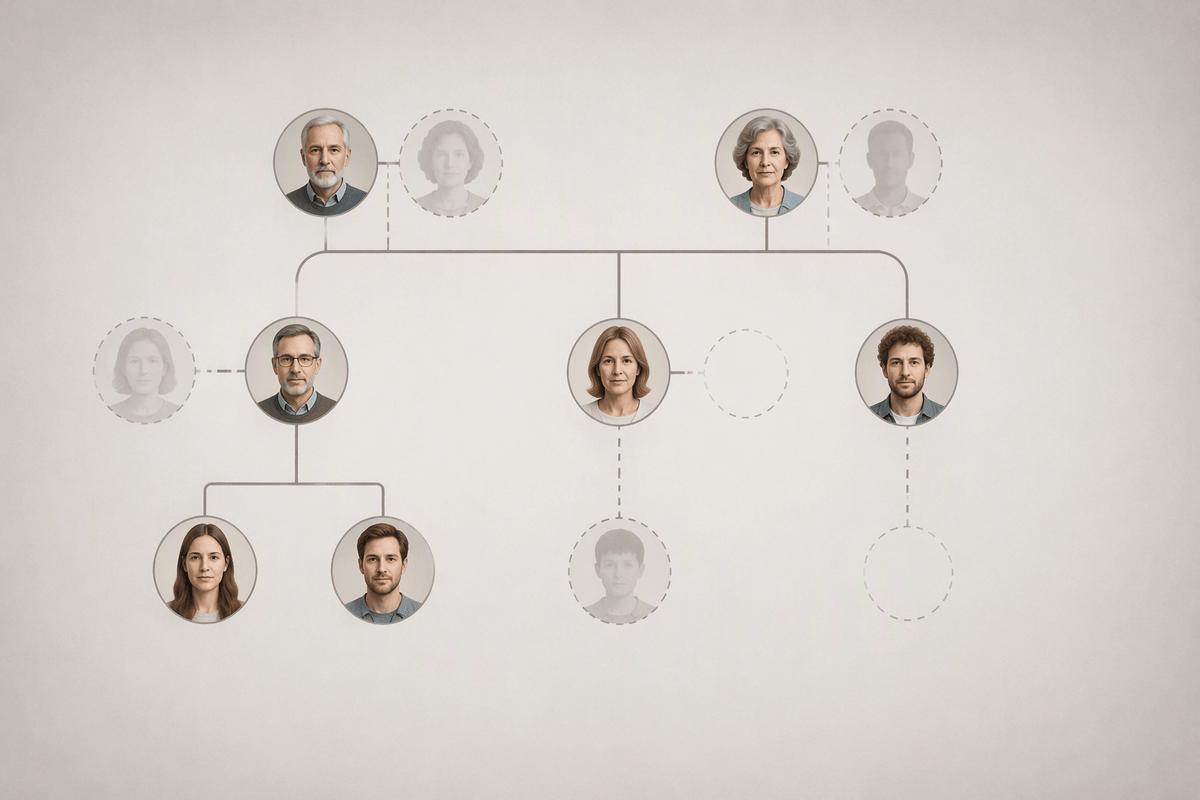
It often starts with a small correction mid-conversation: “Aunt Linda didn’t have cancer—she had a hysterectomy.” Or someone realizes “stomach cancer” was really colon cancer, diagnosed decades ago when records were thinner. Those details can feel petty next to chemo schedules, but patterns hide in them: ages at diagnosis, cancers that cluster in the same branch, and repeated combinations. When the family story is patchy, the gaps themselves become part of the uncertainty a counselor has to work around.
Your own tumor can add another layer of clues, sometimes contradicting the family narrative. Certain pathology features, multiple primary cancers, or a diagnosis at a younger age may push the conversation toward inherited risk even if relatives seem “fine.” Still, none of it behaves like a single smoking gun—adoptions, small families, and early deaths can flatten a real pattern, while coincidence can mimic one. The goal is usually a clearer risk shape, not a tidy conclusion.
Test choices that shape what results can mean
The moment you hear “we can test for that,” it can sound like there’s one obvious button to press. Then the options show up: a small, targeted test because a specific gene is suspected, versus a broader panel that looks across many genes at once. On paper, “more” seems safer. In practice, bigger panels can surface results that are harder to place—findings in genes you weren’t expecting, or changes that don’t map neatly onto your family story.
What gets tested also shapes what a “negative” can honestly mean. If testing focuses on one gene, a negative mostly answers that one question. If it’s a panel, a negative covers more territory, but it still can’t rule out every inherited risk or explain every cancer pattern. Some people also run into mismatched expectations when tumor testing is discussed alongside inherited testing; they sound similar, but they’re built to answer different clinical questions, and the overlap isn’t always complete.
Uncertain and unexpected findings that create new stress
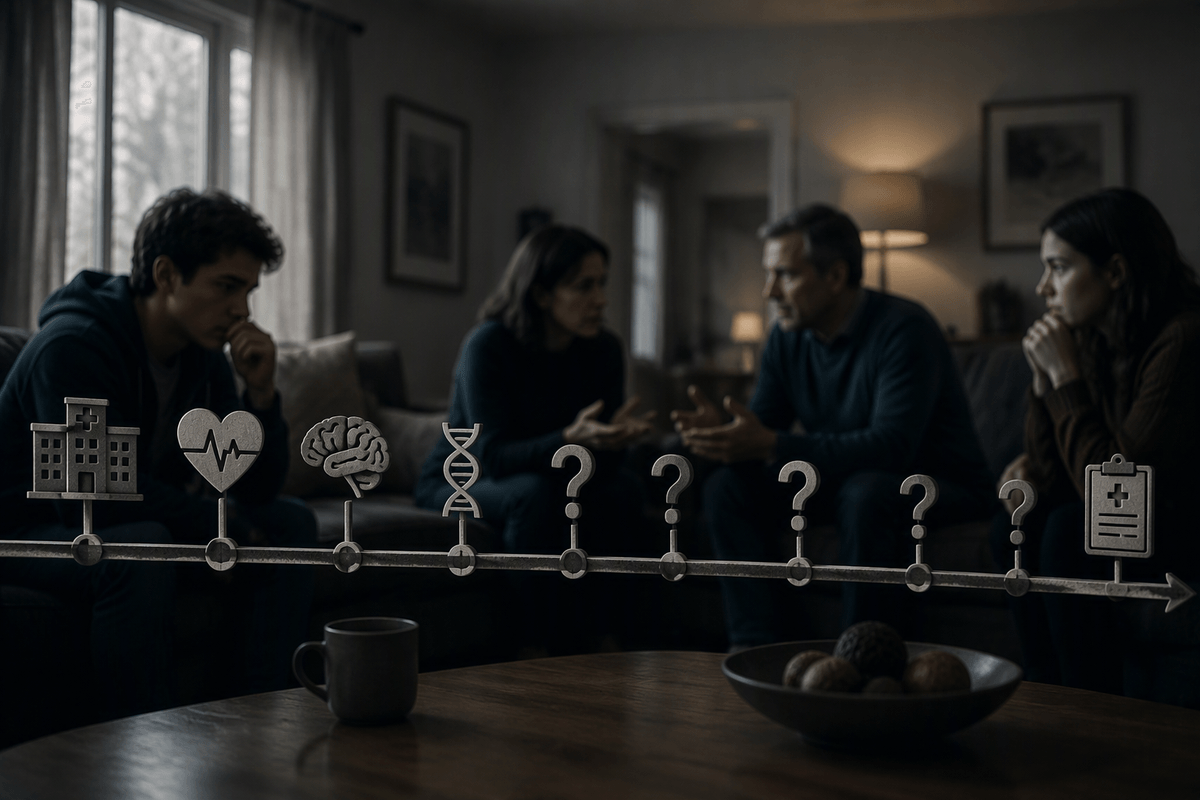
The stress spike often shows up later, not in the appointment. It’s when you re-open the portal message and see a result that doesn’t match the mental categories you prepared for. A “variant of uncertain significance” can read like a half-answer, and people tend to treat it like a warning label anyway—especially if a relative is texting, “So does this mean we all have it?” An unexpected gene on a larger panel can be just as unsettling: it may not line up with the cancers in your family, yet it’s now part of your record.
Treatment decisions and family conversations move fast, while uncertain findings may stay uncertain for years, and reclassification doesn’t always reach everyone in real time. Even a clearly “positive” inherited result can land with surprises—like realizing the risk picture may extend to cancers you weren’t watching for, or to relatives who weren’t part of the original worry. The data arrives clean; the meaning rarely does.
How inherited risk can change treatment decisions
Sometimes it’s a single line in the chart that changes the tone of the next visit: “pathogenic variant,” or even “strong suspicion—testing pending.” The cancer itself hasn’t changed, but the conversation can. A surgeon may start comparing a lumpectomy to a mastectomy in a different way, or bring up removing the second breast “for symmetry” when what they’re really weighing is future risk. In colon settings, people sometimes notice the plan drifting from “treat what’s here” toward “prevent what could come next,” even if that prevention feels like extra loss layered onto an already heavy diagnosis.
Drug choices can shift too, but not with the clean logic people expect. Some inherited findings can open doors to specific therapies or trials, while others mainly change how closely recurrence and second-cancer risk gets watched. The results can arrive mid-treatment, or land in a gray zone where the team has to decide how much weight to give them right now versus later.
Ripple effects for relatives, parenting, and identity
The awkward moment is often a group text, not a clinic visit: “Should I get tested too?” “What about the kids?” “Does this mean Mom gave it to us?” A result that felt personal in the exam room suddenly becomes shared information, and it doesn’t travel cleanly. One sibling wants details immediately, another goes quiet, and someone focuses on the wrong takeaway—treating an uncertain finding like a diagnosis, or a negative result like a family-wide all-clear.
Parenting questions can land with the most emotional weight because they mix future planning with guilt that doesn’t belong to any one person. Even when an inherited variant is clear, it can be hard to decide what to tell children now versus later, and who in the family “owns” the job of explaining it. People also notice identity shifting in small ways: “I’m the one with the gene,” or “I’m the lucky one,” as if genetics assigns roles. The science may be stable; the family meaning often isn’t.
Revisiting results as science, records, and life change
Months later, it may be a different kind of jolt: a relative forwards a pathology report you’ve never seen, or you notice an old record finally got scanned into the portal with a more specific diagnosis date. Suddenly the “family history” you thought was settled looks slightly off—an earlier age at diagnosis, a different primary site, a second cancer that was never mentioned. None of it feels dramatic on its own, but it can change how well your test result matches the story it was supposed to explain.
Science moves, too, in a way that’s easy to miss while you’re busy being a patient. Panels expand, genes get better studied, and uncertain variants sometimes get reclassified—yet not always on a timeline that lines up with your anxiety or your next surgery decision. Even a prior “negative” can age differently if the original testing was narrow. Revisiting isn’t backtracking; it’s acknowledging that the risk picture can sharpen as the facts and the tools catch up.