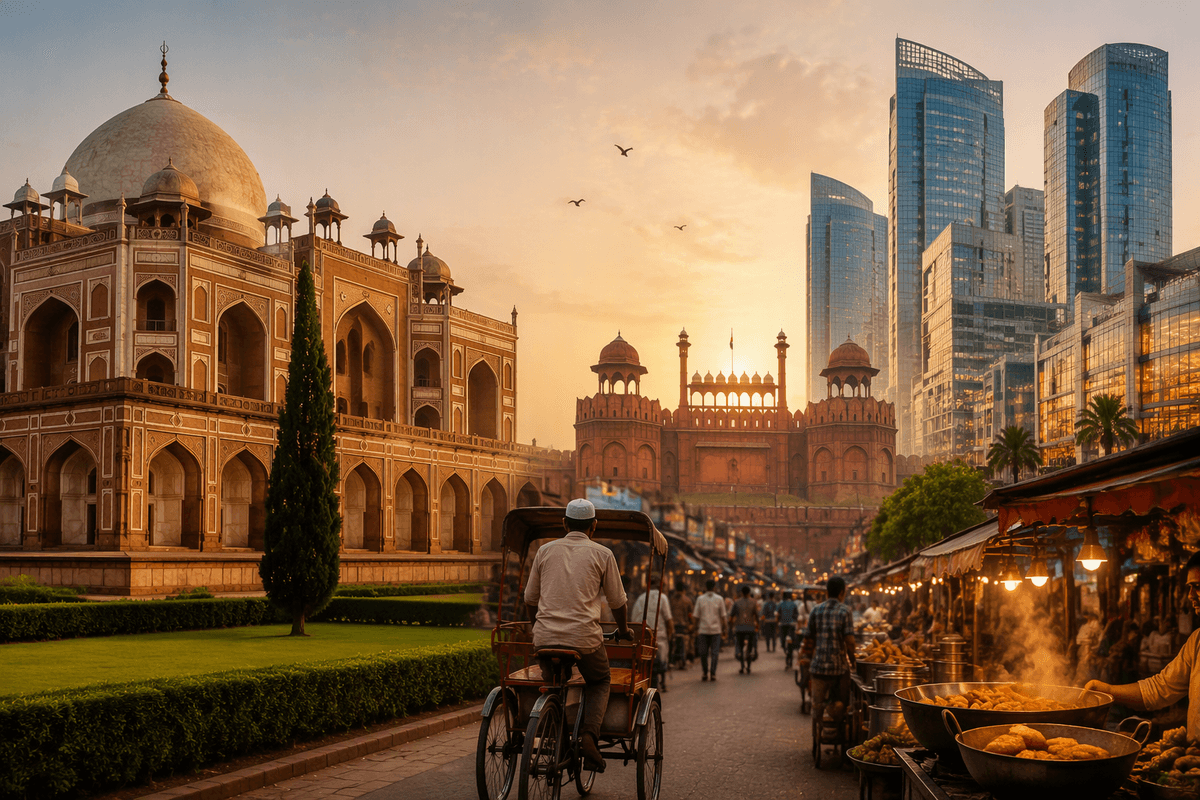
Why Delhi’s Holi feels different
I hesitated the night before Holi because Delhi doesn’t do “gentle” festivals: it does scale. The energy is electric, but it’s also a citywide disruption—late-morning lanes turning into color choke points, metro stations feeling like funnels, and pockets of calm existing only if you choose them on purpose.
What makes Delhi’s Holi feel different is the mix of extremes in a few kilometers: families celebrating on their building terrace, temple courtyards with devotional songs, and streets where the vibe can shift from joyful to too-rowdy fast. You get real, unfiltered participation here—but that authenticity comes with less control, more noise, and more chances for misunderstandings around personal space.
Think of it as a set of dials: spontaneity vs predictability, street immersion vs personal boundaries, cost vs comfort. Delhi rewards planning—not to sterilize the fun, but to keep your day from being decided by crowds, closures, or a dead phone at the worst moment.
Pick your Holi style: street, temple, or ticketed party
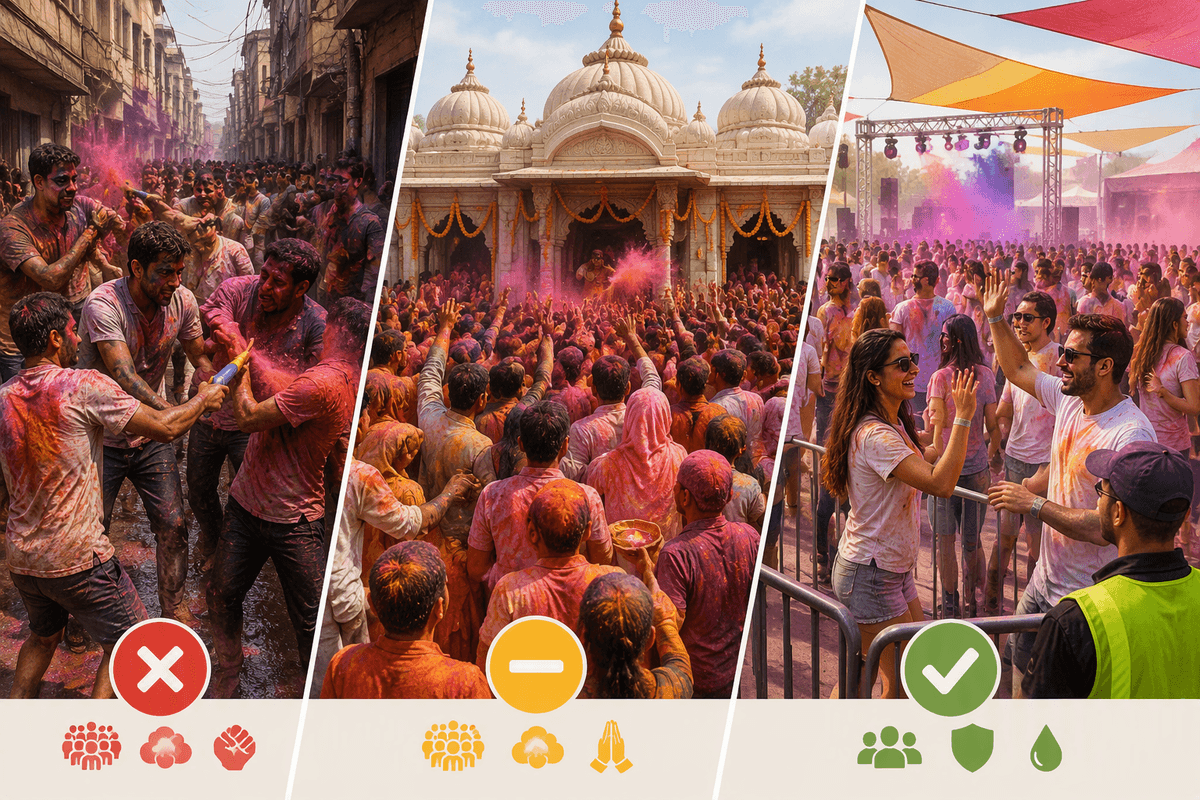
The first decision is how much unpredictability you’re willing to “pay” for with time and nerves. Street Holi is the most visceral—especially in residential pockets of South/West Delhi where neighbors play in their lanes—but it’s also where the vibe can swing fastest, and where being clearly out-of-place attracts attention. If you go street-first, go early (think 8–10am), commit to one neighborhood, and accept that you may need to exit quickly if it gets too loud or too grabby.
Temple Holi is easier to read: you’re there for a ritual, not a free-for-all. The limitation is crowd compression—entry lines, shoe piles, and very little personal space—so it works best if you can handle close quarters and keep valuables to near-zero. You’ll get less “play” time, more observing, and that’s not a bad thing on a first trip.
Ticketed parties buy you control: gated entry, showers, DJs, and staff who actually intervene. You trade spontaneity (and some local texture) for predictability, plus higher cost and the risk of a “tourist bubble.” For many first-timers, starting ticketed and then doing a short street walk later is the cleanest compromise.
Plan the day: timing, transport, and meeting points
At 7:30am, the biggest question isn’t “where’s the best Holi?”—it’s “how quickly can I leave if this goes sideways?” Delhi feels manageable early, then the city progressively locks itself into slow-moving knots. My preferred shape for a first-timer is a two-phase morning: a committed start (street or temple) from roughly 8–10:30am, then a hard pivot to somewhere controlled before noon, when fatigue and crowd density both rise.
Transport is the part people underestimate. The Metro can be efficient, but stations become funnels and you may not want to enter looking obviously “in play.” App cabs can be hit-or-miss once lanes are blocked, and drivers sometimes refuse pickups if you’re covered in color. If you’re going street-style, pick a neighborhood you can walk within for 60–90 minutes, then take a pre-booked cab from a main road (not a tiny lane) to your next stop.
Set one simple meeting point that still works when phones are struggling: a specific café/hotel lobby on a main road, or a metro station exit number, with a “wait no more than 15 minutes” rule. It feels strict, but it prevents the classic Holi fail: everyone is safe, and nobody can find each other.
Stay safe: colors, crowds, consent, and scams
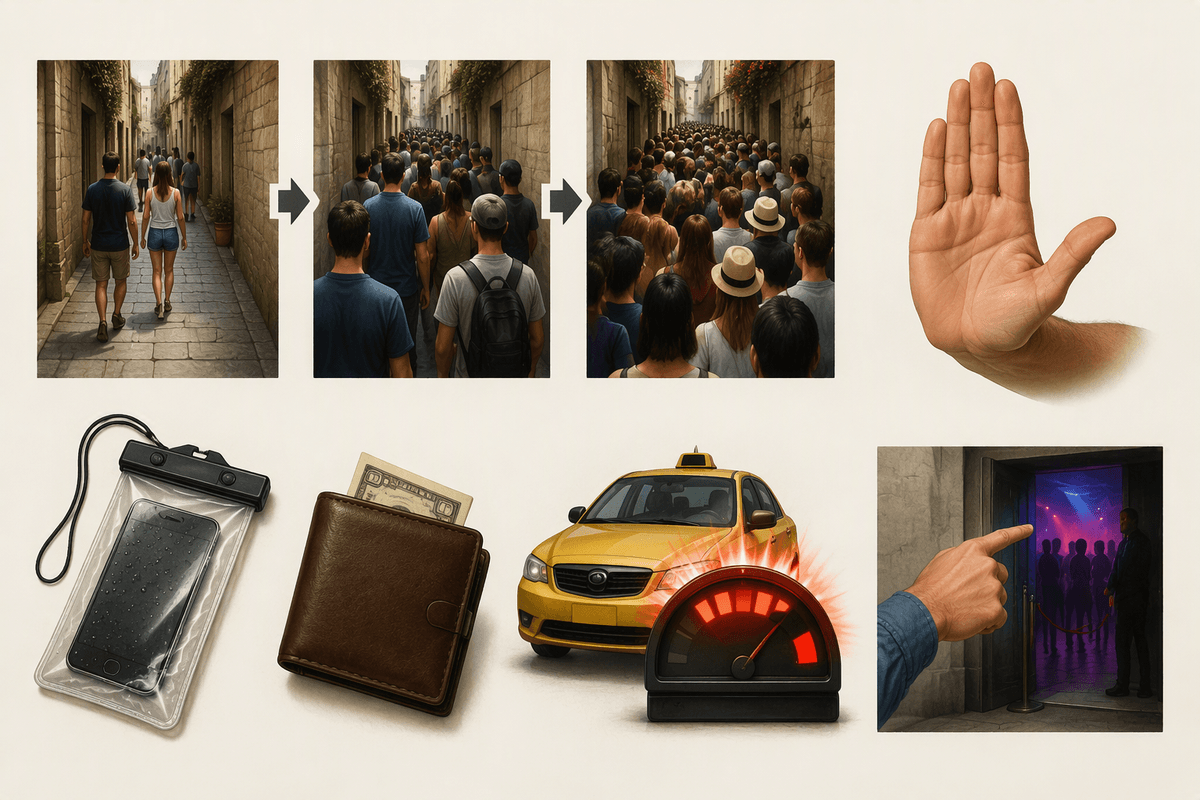
The first time someone raised a fistful of color near my face, I realized “fun” and “risk” arrive together on Holi—especially once the lanes start filling in. If you’re in the street, decide your personal boundary before you step out: I’m fine with color on my arms and shirt, not fine with hands on my waist or anyone aiming at my eyes. Say “no” early, once, and move—arguing tends to attract a crowd, and crowds are the real hazard in Delhi when momentum builds.
For colors, assume anything wet is suspect. Dry gulal is usually manageable; water balloons and dyed water can sting, irritate skin, and ruin electronics. If someone insists on “just water,” treat it as a polite cue to step back, not negotiate. Keep your phone in a sealed pouch, carry minimal cash (one note for small buys), and leave cards and passport at the hotel—pickpocketing isn’t constant, but the conditions are perfect for it.
Scams on Holi are less elaborate and more opportunistic: inflated “special day” taxi prices, random “entry fees” to lanes, and friendly strangers steering you toward a “party” you didn’t choose. Your safest rule is boring but effective: if it wasn’t your plan at breakfast, it’s not your plan at 11am.
What to wear, carry, and protect
I almost wore my “nice travel shirt” out of habit, then remembered Holi punishes optimism. Go disposable: a thin, light-colored cotton tee you don’t mind trashing, plus shorts you can move in (or cheap joggers if you prefer less skin exposure). Closed-toe shoes matter more than you’d think—lanes get slick, and sandals turn into a slow-motion foot-dye experiment. If you’re doing temple first, choose something you can sit in and slip shoes on/off quickly; lace-up sneakers are secure but annoyingly slow at crowded entrances.
Carry less than you want to. One ID copy, a single card, and a small cash note, all inside a zip pocket. Your phone is the weak link: use a waterproof pouch and set a simple lock-screen message with your hotel name in case it gets dropped. Sunglasses help, but cheap ones—color scratches lenses fast. Skip contact lenses if you can; dry powder and rubbing eyes is a bad combo. A tiny bottle of water and a few tissues do more for comfort than any “Holi kit,” especially once you realize every shop isn’t open on schedule.
Leave with memories, not regrets
By early afternoon, when my shirt had turned into a damp, gritty second skin, the best decision I made was stopping while I still liked the day. You can always chase “one more lane” or “one more photo,” but fatigue makes boundaries fuzzier, and Delhi’s streets get harder to read as crowds thin into scattered groups.
My clean ending rule is simple: once you’ve pivoted back to something controlled, stay there. Trade a little FOMO for a predictable exit—shower, hydrate, and let your phone and nerves recover. If your plan felt slightly strict, that’s not a failure; it’s what lets the memory be joy-first, not a story about getting cornered, lost, or stranded.