What osteopathic medicine actually means in practice
You notice it in small moments first: a shoulder that won’t drop on one side, a neck that turns “enough” but not smoothly, a headache that shows up after a long drive even though you didn’t do anything strenuous. When people book with a DO, they sometimes expect either a regular primary care visit with a different title, or a purely hands-on appointment like they imagine chiropractic to be. In practice, it can feel like a blend—talking through symptoms and history, but also paying attention to how your body is moving today.
Osteopathic medicine is the full medical training and scope; OMT is one tool some DOs use within that. During a visit, the “osteopathic” part often shows up as curiosity about patterns: what your work setup does to your ribs and shoulders, how an old ankle sprain changes your stride, or how stress can keep muscles slightly braced all day. It’s not always obvious why a tight mid-back seems tied to a headache, but noticing those links can change what you track between visits.
Where OMT fits alongside exams, tests, and meds
Sometimes the first surprise is the checklist part: blood pressure cuff, a few questions that sound like any other primary care visit, maybe a quick look at reflexes or how your strength holds when you push against a hand. If you came in expecting the table work to start right away, it can feel like detour. But for a DO, OMT usually isn’t a replacement for evaluating red flags or figuring out whether a new pain behaves like a strain, a nerve irritation, or something that needs imaging or labs.
When hands-on treatment does get added, it often sits in the same plan as the boring-but-useful stuff: activity changes, a short course of medication for sleep or inflammation, or a referral if symptoms don’t match a mechanical pattern. That mix can also be frustratingly inconsistent—some days your exam looks “fine” but your neck still feels guarded. OMT tends to fit best as a way to test and nudge motion restrictions while the rest of the workup keeps the bigger picture honest.
How hands-on treatment can change symptoms indirectly
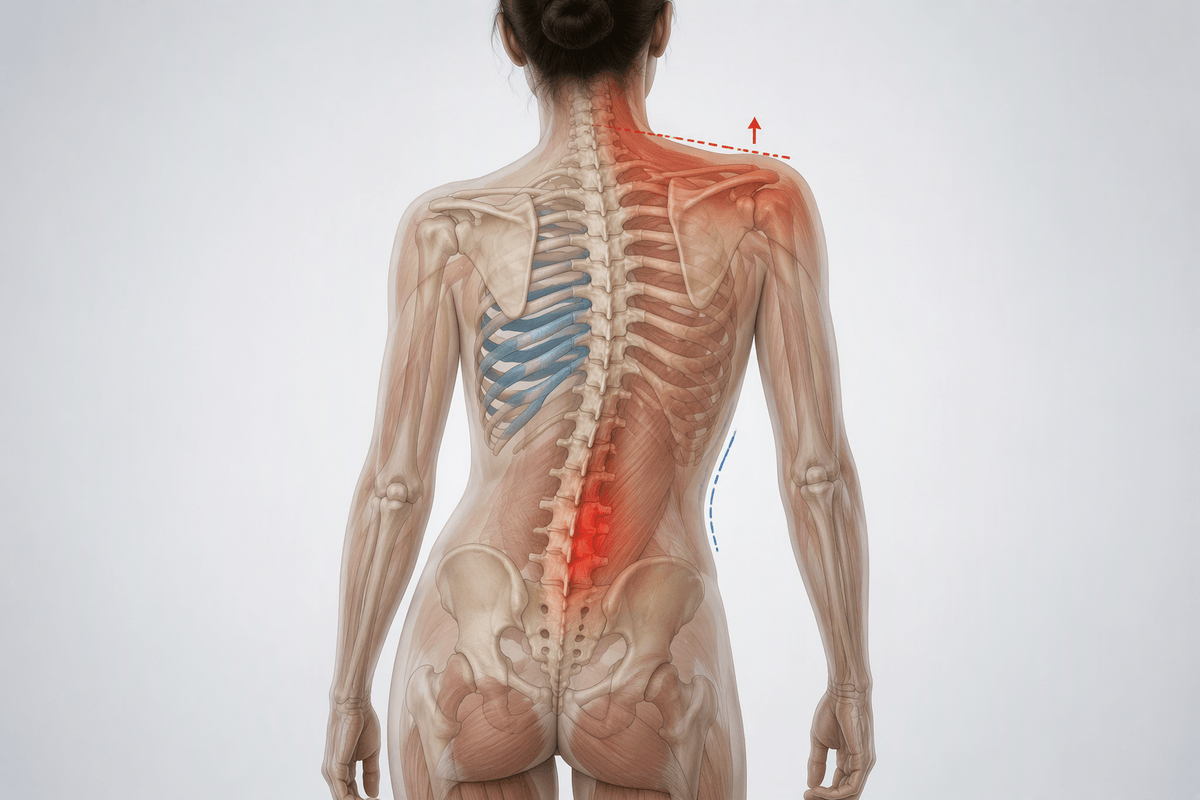
You might leave a hands-on session thinking, “They barely touched the spot that hurts.” That can feel like a mismatch, especially if you’re used to care that targets the loudest pain. But with OMT, the working idea is often that the painful area is doing extra work to compensate—holding steady for a rib that doesn’t move well, a shoulder that rides up, or a low back that’s bracing because your hips aren’t sharing the load the way they used to.
When a DO spends time on your upper back, ribs, jaw, or even your breathing mechanics, the change you notice may be indirect: your head turns a little easier on the drive home, your shoulders sit lower without effort, or the headache feels less “plugged in” by evening. It’s not always consistent, and that inconsistency can be the point—if symptoms ease when motion returns somewhere else, it suggests the pattern matters, not just the sore patch. Over a few days, the best signal is often what stops provoking you as quickly.
Conditions where OMT feels straightforward versus uncertain
It can be oddly convincing when the pattern is clean: you stand up from the table and your neck rotation is simply there again, or the band of tightness between your shoulder blades doesn’t “catch” on the first deep breath. Situations like rib stiffness after a cough, a cranky upper back after travel, or tension-type headaches that predictably follow long screen days can feel straightforward because the trigger is obvious and the restriction is easy to re-check in the room.
The uncertainty shows up when symptoms don’t behave like a simple motion problem. Tingling that comes and goes, pain that jumps sides, or a low back that flares despite “good posture” can make OMT feel less like a fix and more like information-gathering. Old injuries, sleep debt, and stress-bracing can keep resetting the same tight pattern faster than hands can change it, so results vary week to week. In those cases, the useful question often becomes less “Did it cure it?” and more “Did anything move differently afterward—and did that change what set it off?”
Why a reasonable session can cause soreness or doubt

The next morning can be the awkward part. You roll your shoulders or look over your blind spot and notice a new, tender “worked” feeling—sometimes in a place that wasn’t your main complaint. That soreness can read like a setback, especially if you expected immediate relief or a dramatic crack-and-go moment. But a reasonable session often changes how tissues share load: a rib that starts moving again, a neck that stops splinting, a low back that no longer does all the stabilizing. When that distribution shifts, the muscles that were quiet may feel unusually busy for a day or two.
Doubt also creeps in because the signal is messy. If your headache eases but your jaw feels achy, or your range of motion improves but you feel “off,” it’s hard to decide what counts as progress. Add normal life—poor sleep, a stressful drive, a long meeting—and it can be unclear whether soreness is from the treatment, your habits snapping back, or both. Sometimes the only solid clue is whether you move a little less cautiously without noticing.
What influences results beyond the hands-on techniques
You can usually tell when the session “took” by the way your body behaves in the small in-between hours—until you sit through a long call, pick up a bag one-handed, or wake up after a choppy night and realize the tight pattern slid right back in. The hands-on work may create a window of easier motion, but your day can close that window quickly without you noticing. Even something as basic as breathing shallowly while stressed can keep ribs and neck muscles slightly braced, so the area that felt looser on the table starts guarding again by afternoon.
Old injuries matter here, even when they don’t hurt anymore. A stiff ankle, a hip that doesn’t extend well, or a shoulder you unconsciously protect can quietly reroute force into your low back or upper traps. Add inconsistent movement—long sitting followed by a sudden workout—and your nervous system may choose “tight and stable” over “loose and mobile.” The result isn’t that OMT failed; it’s that your body keeps voting for the pattern that feels safest.
Choosing a clinician and setting expectations for visits
You can feel the difference before anyone puts hands on you: the way the visit starts. Some clinicians move quickly to a focused complaint, while others ask about sleep, work setup, old sprains, and what a “normal” day of sitting and carrying looks like. That can sound like small talk, but it’s often the only way to explain why your neck tightens after emails or why your low back flares after a short walk. It also helps to be clear about what you’re actually booking—some DOs don’t offer OMT routinely, and some practices have limited hands-on time built into the schedule.
Expect the first appointment to feel a little slower and less dramatic than you imagine. A useful visit often includes re-checking motion, noticing what changes after treatment, and deciding whether the pattern is consistent enough to work on over a few sessions. Progress may look like fewer “easy triggers,” not a permanent fix. If you leave unsure, it can help to ask what they were tracking, what would count as a good sign over the next 48 hours, and what would be a reason to reassess the plan.